You take every precaution to protect your home and loved ones, but have you ever stopped to think about the security of your locks? A simple turn of a key or a swipe of a card can be the difference between safety and vulnerability. As you go about your daily routine, it's easy to overlook the small details that can make a big impact. But the truth is, your locks may be more susceptible to break-ins than you think. Are your locks up to par, or are they a weak link in your home's security?
Key Takeaways
- Regularly inspect locks for signs of wear and tear, rust, corrosion, or mineral buildup to ensure optimal security.
- Deadbolts with solid metal bolts and reinforced strike plates provide maximum security against forced entry.
- Smart locks offer advanced features like keyless entry, biometric authentication, and remote monitoring for enhanced home security.
- Install locks in strategic locations, such as 60 inches from the floor on the front door, to prevent kick-ins and improve security.
- Balance convenience and security when upgrading locks, considering keyless entry, integration with home systems, and advanced security features.
Assessing Your Locks' Condition
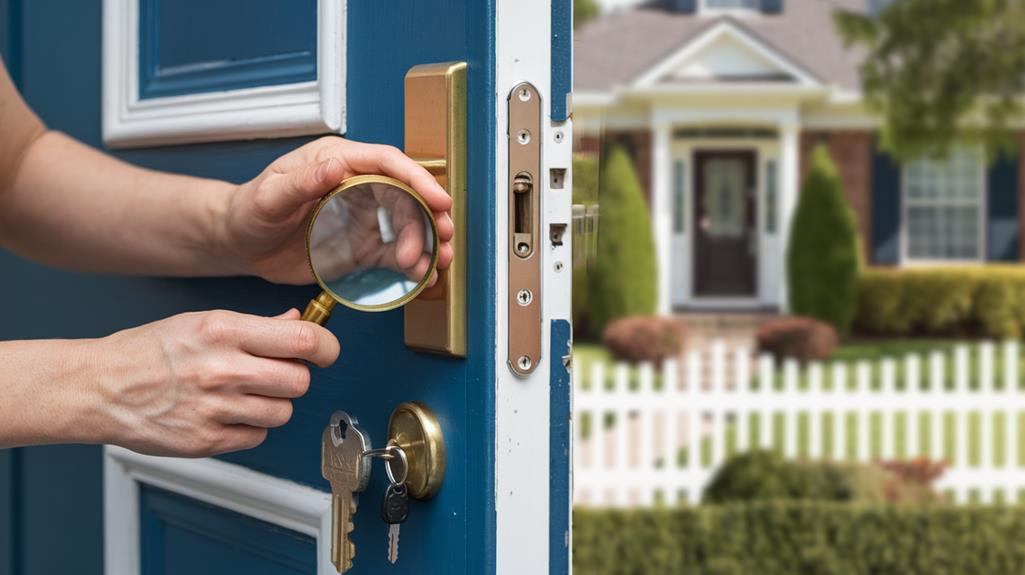
When evaluating your locks' condition, start by visually inspecting each lock in your home, paying close attention to any signs of wear and tear. Check for rust, corrosion, or mineral buildup that can weaken your locks. Look for loose screws, misaligned strike plates, or damaged frames that can compromise the lock's security. Make note of any locks that are difficult to turn or have stuck keys.
Next, test each lock to verify it's functioning properly. Turn the lock's handle or knob to check if it's secure. If you have smart locks, test their electronic functions to verify they're working correctly.
Check your door frames for any gaps or weaknesses that can allow an intruder to bypass the lock.
You'll also want to inspect your locks' surrounding areas for any vulnerabilities. Check if the surrounding walls or doors have any weaknesses, such as gaps or holes, that can be exploited by an intruder.
Types of Locks to Consider
Now that you've evaluated your locks' condition and surrounding areas, it's time to weigh the types of locks that can provide the best security for your home.
You'll want to weigh the merits of locks that offer a good balance of convenience, durability, and security. Deadbolts are a popular choice, as they provide an added layer of protection against forced entry.
Look for deadbolts with a solid metal bolt and a reinforced strike plate for maximum security.
Another option is smart locks, which offer advanced features like keyless entry, biometric authentication, and remote monitoring.
These locks can be integrated with your home's smart system, allowing you to control access and monitor activity remotely. Chain locks, while not as secure as deadbolts or smart locks, can still provide an added layer of security for doors and windows.
When selecting a lock, think about the level of security you need and the type of door or window it will be installed on.
You should also look for locks that meet industry standards, such as those certified by the American National Standards Institute (ANSI).
Evaluating Lock Placement
| Area | Lock Placement Recommendation | Why It Matters |
|---|---|---|
| Front door | Install a deadbolt lock at least 60 inches from the floor | Prevents kick-ins and makes it harder for intruders to access |
| Back door | Use a reinforced lock or a smart lock with a camera | Deters potential intruders and allows you to monitor activity |
| Basement or garage door | Install a heavy-duty lock or a chain lock | Prevents unauthorized access to your home's most vulnerable entry points |
When evaluating lock placement, consider the unique layout of your home and the potential vulnerabilities. By installing locks in strategic locations, you'll substantially improve your home's security and reduce the risk of break-ins.
Lock Maintenance and Upkeep
To guarantee your locks remain in good working condition, consider the following maintenance tasks:
- Lubricate your locks every 6-12 months to keep them running smoothly and prevent them from jamming.
- Check your locks for signs of wear and tear, such as rusty hinges or loose screws, and address these issues promptly.
- Clean your locks regularly to prevent dirt and grime from accumulating and affecting their performance.
Smart Lock Security Features
When evaluating your smart lock's security features, you'll want to weigh the types of biometric authentication methods it uses, such as fingerprint or facial recognition.
You should also think about how your lock stores and encrypts sensitive data, like access codes and user information. Understanding these aspects will help you evaluate the overall security of your smart lock and identify potential vulnerabilities.
Biometric Authentication Methods
You're probably familiar with the traditional key and password, but biometric authentication methods take smart lock security to the next level.
Biometric authentication uses unique physical characteristics, such as fingerprints, faces, or irises, to verify your identity.
This method provides an additional layer of security, as it's virtually impossible to replicate or guess someone's biometric data.
Biometric authentication methods offer several benefits, including:
- Fingerprint recognition: This method uses a sensor to scan your fingerprint and match it to a stored template. It's fast, convenient, and highly secure.
- Facial recognition: This method uses a camera to capture your facial features and match them to a stored template. It's contactless and can be used in conjunction with other authentication methods.
- Iris scanning: This method uses a camera to capture the unique patterns in your iris and match them to a stored template. It's highly secure and virtually impossible to replicate.
Biometric authentication methods can be used alone or in combination with traditional authentication methods, such as passwords or PINs, to provide an additional layer of security for your smart lock.
Encryption and Data Storage
Biometric authentication methods greatly enhance smart lock security, but a strong lock also requires robust encryption and secure data storage to protect sensitive information. When you choose a smart lock, you're not just storing your biometric data; you're also storing access codes, user data, and other sensitive information.
It's crucial to guarantee that this data is encrypted and stored securely. Look for a smart lock that uses end-to-end encryption, which means that data is encrypted on your device and can only be decrypted by the lock itself. This guarantees that even if your data is intercepted, it can't be read or accessed by unauthorized parties.
Additionally, check if your lock uses a secure data storage method, such as a secure element or a trusted execution environment. These methods provide an additional layer of protection for your sensitive data. By choosing a lock with robust encryption and secure data storage, you can rest assured that your home and data are protected.
Always verify the security features of a smart lock before making a purchase.
Common Lock Weaknesses Exploited
One of the most significant vulnerabilities in home security systems is the lock itself.
You might think that your locks are secure, but many common lock weaknesses can be exploited by potential intruders. Understanding these weaknesses is essential to identifying areas for improvement in your home security system.
Some common lock weaknesses that can be exploited include:
- *Weak or worn-out keys*: If your keys are damaged, worn out, or poorly made, they can be easily broken or picked by a determined intruder. Make sure to replace your keys regularly and use high-quality keys that are resistant to wear and tear.
- *Poor lock installation*: If your locks aren't installed correctly, they can be easily bypassed or broken. Certify that your locks are installed by a professional and that the doors and frames are secure.
- *Lack of lock maintenance*: Failure to maintain your locks regularly can lead to mechanical failures, making them easier to exploit. Regularly check your locks for damage and perform routine maintenance tasks to keep them in good working condition.
Upgrading Your Lock System
Enhancing your home's security begins with a solid lock system. You'll want to start by evaluating your current locks and identifying areas for improvement.
Consider replacing traditional spring-latch locks with deadbolt locks, which provide an additional layer of security. If you have a smart home, look into integrating smart locks that can be controlled remotely and grant access to trusted individuals.
When upgrading your locks, choose high-quality options that meet your specific needs. Look for locks with anti-pick pins, anti-drill plates, and anti-snap cylinders for added security. Consider the type of material your door is made of and choose a lock that's compatible.
Don't forget to also upgrade your door hardware, such as hinges and door frames, to prevent forced entry.
Remember to also consider the convenience factor when upgrading your locks. Keyless locks and smart locks can provide ease of use and flexibility. By upgrading your lock system, you'll substantially improve your home's security and reduce the risk of break-ins.
