Is it true that the right locksmith tools can make or break your DIY project? When you're dealing with lock-related tasks in Las Vegas, understanding which tools to choose is vital for success. You might think any set will do, but the specific requirements of local locks can complicate things. By exploring the essential tools needed for both beginners and advanced users, you'll learn how to prioritize quality and functionality. What you discover could greatly influence your approach to locksmithing and save you time and frustration.
Key Takeaways
- Assess the types of locks you'll encounter in Las Vegas to determine the necessary tools for your DIY projects.
- Start with essential items like a lock pick set, tension wrenches, and basic screwdrivers for general tasks.
- Research reputable brands to ensure you invest in high-quality tools that offer reliability and longevity.
- Set a realistic budget, prioritizing essential tools while leaving room for future needs and unexpected expenses.
- Familiarize yourself with local locksmithing laws to ensure compliance while working on locks in Las Vegas.
Understanding Locksmithing Basics
When diving into locksmithing, understanding the basics is essential before tackling any DIY projects. You need to grasp the fundamental principles of how locks operate. Most locks function on a simple mechanism involving pins and tumblers. When the correct key is inserted, it aligns these pins, allowing the lock to turn. Familiarizing yourself with this concept will help you appreciate the intricacies of various locks.
Next, learn about the different types of locks available, such as pin tumbler, wafer, and disc locks. Knowing their design and functionality will guide your approach when tackling repairs or installations.
You should also understand the terminology associated with locksmithing, like "keyway," "bitting," and "shear line." This knowledge will make it easier to communicate your needs when seeking advice or purchasing materials.
Additionally, practice basic lock manipulation techniques, such as picking and bypassing. While you won't need to become an expert overnight, developing a feel for these skills will enhance your confidence.
Lastly, always prioritize safety. Make sure you have permission to work on locks, and never attempt to manipulate locks that aren't yours. Understanding these basics sets a solid foundation for your locksmithing journey.
Essential Tools for Beginners
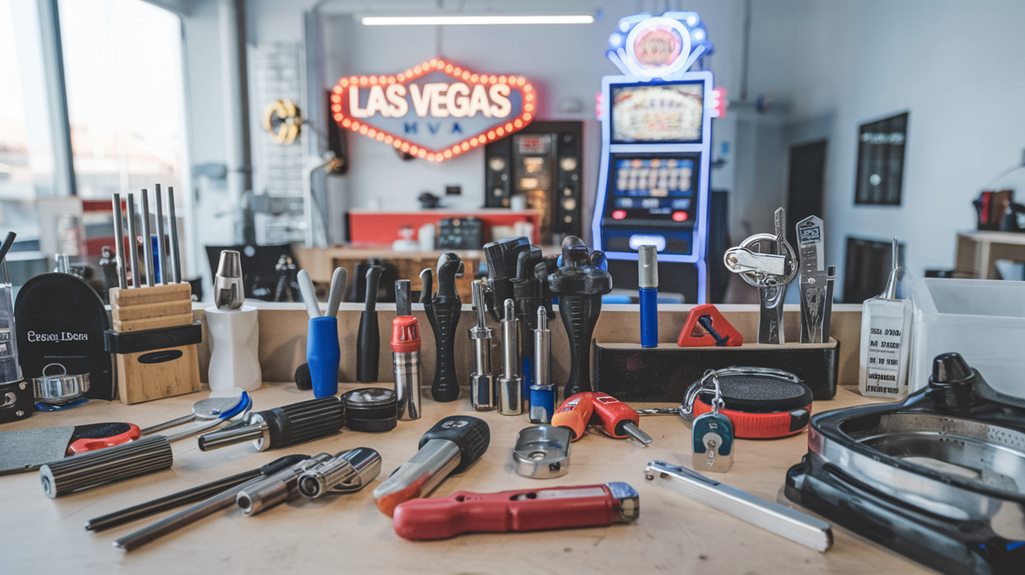
To successfully start on your locksmithing journey, you'll need a solid set of essential tools that can help you tackle various projects with confidence. Begin with a high-quality lock pick set. This will give you the ability to practice and understand different lock mechanisms. Look for a set that includes a variety of picks and tension wrenches.
Next, invest in a good pair of tweezers and a flashlight. Tweezers are essential for handling small components, while a dependable flashlight will help you see intricate details when working in dimly lit areas. A plug spinner can also be beneficial for quickly re-locking a cylinder after picking it open.
Don't forget about a set of screwdrivers, both flathead and Phillips. They're necessary for disassembling locks and installing new ones.
A handy multi-tool can come in handy for various tasks and adjustments.
Advanced Tools for Experienced Users
As you advance in your locksmithing skills, you'll want to invest in necessary lock picking tools and key cutting equipment to tackle more complex jobs. Advanced security devices will also become vital in enhancing your projects. With the right tools, such as high-quality lock picks and precision key cutters, you'll be ready to take on any challenge that comes your way.
Essential Lock Picking Tools
For those who've honed their skills and are ready to tackle more complex lock picking tasks, investing in advanced lock picking tools is necessary. These tools can elevate your proficiency and allow you to handle a wider range of locks with ease.
First, consider a high-quality tension wrench. This tool helps you apply the necessary tension to the lock while you manipulate the pins. A versatile set of lock picks, including hooks and rakes, is also vital. Each pick serves a specific purpose, enabling you to tackle different lock types effectively.
You might also want to add a set of bypass tools to your collection, which can simplify the process on certain locks. Additionally, consider investing in a practice lock or transparent lock to refine your skills. This hands-on experience is invaluable for understanding the inner workings of locks.
Lastly, keep a pocket-sized pick set for on-the-go needs. With these essential tools, you'll be well-equipped to take on advanced lock picking challenges confidently, ensuring you're prepared for any DIY project in Las Vegas. Remember, practice makes perfect, so keep honing your skills!
Key Cutting Equipment
When you're ready to enhance your key cutting skills, investing in advanced key cutting equipment is vital. This gear can greatly enhance your efficiency and accuracy, allowing you to produce high-quality keys with ease.
One of the top tools to ponder is a professional key cutting machine. These machines can handle a variety of key types, from standard house keys to more intricate automotive keys. Look for models that offer both manual and automatic options to match your comfort level.
Another valuable addition is a key duplicator. This tool simplifies the process of creating exact duplicates of existing keys, ensuring precision every time.
You might also want to invest in a key gauge, which helps you identify key types and sizes quickly, saving you time during your projects.
Don't overlook high-quality blank keys. Stocking a diverse range of blanks ensures you can cater to various customer needs and lock types.
Advanced Security Devices
Many locksmiths find that investing in advanced security devices takes their skills to the next level. If you're serious about enhancing your locksmithing capabilities, it's imperative to explore the range of tools available to you. Devices like electronic key programmers and advanced lock pick sets can give you a significant advantage.
Electronic key programmers allow you to create and duplicate transponder keys, which are increasingly popular in modern vehicles. Mastering this tool not only expands your service offerings but also attracts more clients.
Advanced lock pick sets, designed for experienced users, often include specialized picks and tension tools to tackle high-security locks. With these tools in your arsenal, you can confidently handle complex locking mechanisms that typical tools can't manage.
Additionally, consider investing in bypass tools and decoding tools, which can help you access locked doors without causing damage. Remember, using these devices necessitates practice and knowledge, so don't rush the learning process.
Choosing Quality Over Quantity
Investing in high-quality locksmith tools can make all the difference in your DIY projects. When you prioritize quality, you're not just buying tools; you're ensuring reliability and efficiency. Cheap tools might seem appealing at first, but they often break or underperform when you need them most.
Imagine struggling with a flimsy tool that slips or bends while you're trying to pick a lock. Frustrating, right? Quality tools typically come with better craftsmanship, which translates to improved performance and longevity. You'll find that investing in reputable brands like the ones used by the Local Locksmith in Las Vegas, NV often leads to better results and less hassle in the long run.
Moreover, quality tools can enhance your skills. They provide a more comfortable grip and greater precision, allowing you to complete tasks with confidence.
Budgeting for Your Toolset
Budgeting for your toolset is essential if you want to tackle locksmithing projects without breaking the bank. Start by determining how much you can realistically spend. Make a list of the tools you'll need, prioritizing the most essential items first, such as lock picks, tension wrenches, and a good set of screwdrivers.
When considering your budget, keep in mind the importance of investing a bit more initially in quality tools, as highlighted by Commercial Locksmith Las Vegas.
Next, research the prices of these tools and look for deals. Consider both new and used options. You might find high-quality tools at a fraction of the cost if you explore second-hand shops, online marketplaces, or local classifieds.
Once you've gathered price information, create a budget that includes a little extra for unexpected expenses. It's always wise to leave some room for those tools you might realize you need later on.
Don't forget to factor in shipping costs if you're ordering online. Ultimately, by sticking to your budget and being strategic about your purchases, you'll build a solid toolset that meets your locksmithing needs.
Maintenance and Care Tips
To maintain your locksmith tools in top shape, regular cleaning is essential.
You should also store them properly to prevent damage and guarantee longevity.
Don't forget to apply lubrication techniques to maintain smooth operation and prevent rust.
Regular Cleaning Practices
Keeping your locksmith tools in top shape is essential for ensuring they perform well when you need them most. Regular cleaning practices can make a significant difference in the longevity and effectiveness of your tools.
After each use, take a moment to wipe down your tools with a clean, dry cloth to remove dirt, grime, and moisture. This simple step prevents rust and corrosion from developing.
For more stubborn residue, use a soft brush or cloth slightly dampened with soapy water. Be sure to dry them thoroughly after cleaning. Additionally, pay attention to any moving parts, like locks and hinges. A few drops of lubricant can keep these mechanisms functioning smoothly.
Inspect your tools regularly for signs of wear and tear. If you spot any damage, address it immediately to avoid further issues.
Also, consider using a rust inhibitor on metal tools, especially if they're stored in humid conditions.
Proper Tool Storage
Storing your locksmith tools properly is essential for maintaining their condition and ensuring they're ready for your next DIY project.
First, invest in a sturdy toolbox or storage cabinet that can keep your tools organized and protected from dust and moisture. Use foam inserts or dividers to keep each tool in its designated spot, preventing them from knocking against one another and causing damage.
Next, consider the location of your storage. Keep your tools in a cool, dry place away from direct sunlight, as heat can warp or damage sensitive tools. If you work in a garage or shed, make sure it's well-ventilated to avoid rust and corrosion.
Labeling your storage compartments can save you time when you need to grab a tool quickly. Additionally, you might want to regularly check the condition of your tools while organizing them. This way, you can spot any issues early and address them before they become bigger problems.
Lastly, avoid overloading your toolbox. Excess weight can lead to wear and tear on the hinges and locks, compromising your tool security. By following these storage tips, you'll keep your locksmith tools in excellent condition for all your DIY endeavors.
Lubrication Techniques
Maintaining the functionality of your locksmith tools hinges on effective lubrication techniques. Proper lubrication keeps your tools operating smoothly and extends their lifespan. Here are three key techniques to help you maintain your tools efficiently:
- Use the Right Lubricant: Choose a lubricant specifically designed for locksmith tools. Graphite powder is excellent for locks, while silicone spray works well for hinges and moving parts. Avoid heavy oils that can attract dirt and grime.
- Apply Sparingly: Less is more when it comes to lubrication. Apply a small amount of lubricant to the necessary parts, ensuring it penetrates the moving areas. Wipe away any excess to prevent buildup, which can hinder performance.
- Regular Maintenance Schedule: Create a routine for cleaning and lubricating your tools. Depending on usage, aim to lubricate every few months or after intensive projects. This proactive approach helps you catch wear and tear before it becomes a problem.